
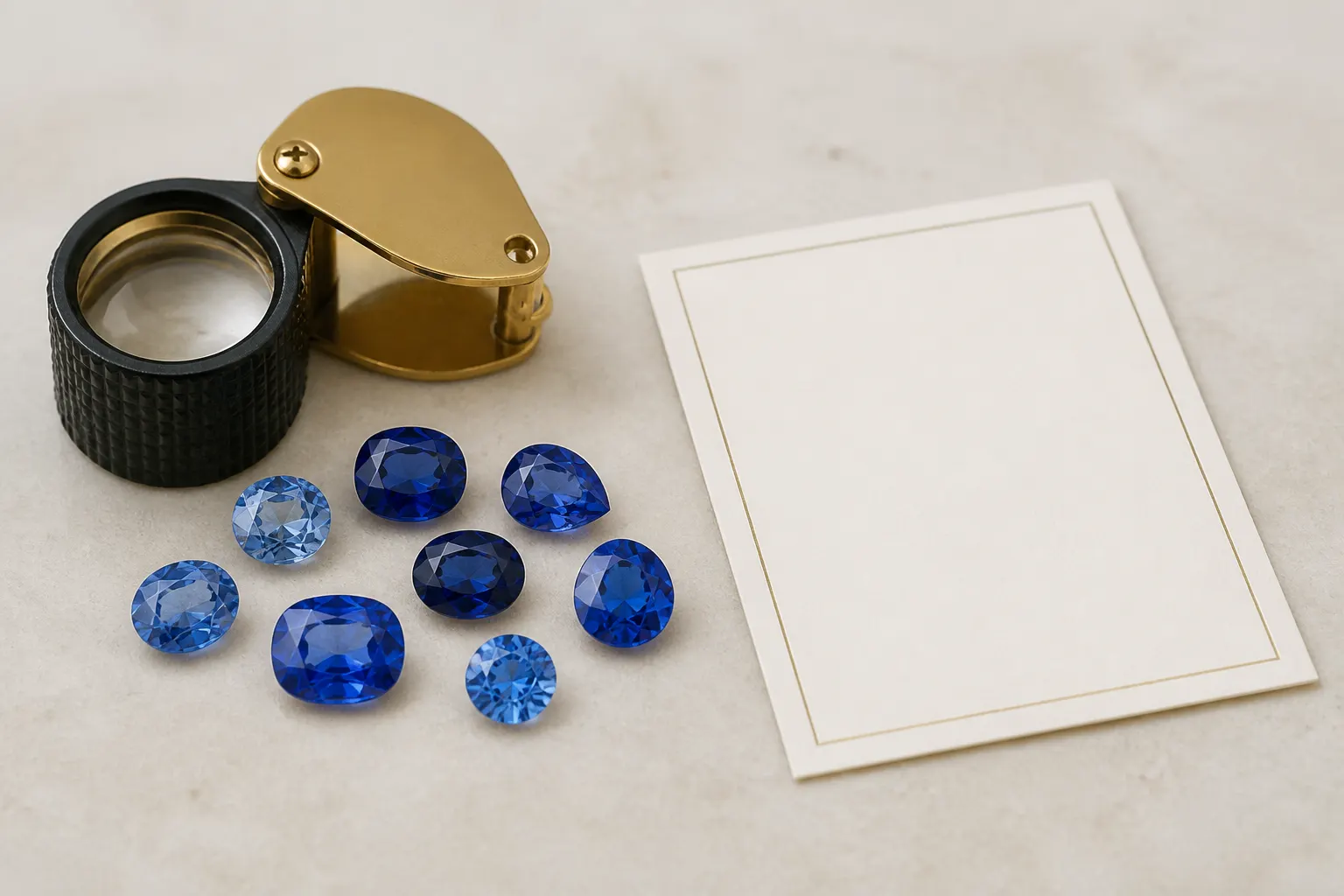
Understanding sapphire blue
Blue sapphire can appear pale blue, cornflower-like, strongly saturated royal blue, violetish blue, grayish blue, or nearly navy. According to GIA, color is the most important sapphire quality factor. Preferred stones are often medium to medium-dark with strong saturation, but personal preference and budget matter.
Judge a stone in more than one lighting environment. A gem that looks lively near a window may appear darker indoors. Online photography can be affected by white balance, exposure, and screen settings, so request neutral-light video and a return window when buying remotely.
Are all sapphires blue?
No. Gem-quality corundum that is not red ruby can be called sapphire. “Fancy sapphire” colors include pink, yellow, orange, green, purple, and colorless. For the keyword “Virgo birthstone,” blue remains the clearest traditional association, but a fancy sapphire offers the same high hardness in another palette.
Alternative Virgo colors
Green: peridot and moss agate
Peridot ranges from yellowish green to green and is August’s calendar birthstone. Moss agate is usually translucent with green, brown, or black inclusions that resemble plant forms. They share a color family but look very different.
Orange-red: carnelian
Carnelian is a translucent orange to reddish-brown variety of chalcedony. Its warm color contrasts with sapphire’s cool blue and appears on some alternative Virgo lists.
How to choose your color
Start with what you will actually wear. Cool blue works well with white gold, silver, or platinum; yellow gold creates a warmer contrast. Green peridot and carnelian feel especially warm in yellow or rose gold. If the piece is a gift, consider the recipient’s existing jewelry before relying on a symbolic meaning.
Color terms sellers may use
Names such as royal blue, cornflower blue, teal, midnight, and pastel are descriptive rather than a universal grading scale. Two sellers may use the same term for different appearances. Base your decision on the actual stone, consistent images, measurements, disclosures, and return policy—not the color nickname alone.
How setting and size change color
A dark sapphire may appear even darker in a closed setting, while an open-backed design can admit more light. Larger stones can show zoning or extinction more clearly. Surrounding diamonds and bright white metal can make blue appear crisper; yellow gold creates warmer contrast. Always judge the finished piece if that is what you are buying.